

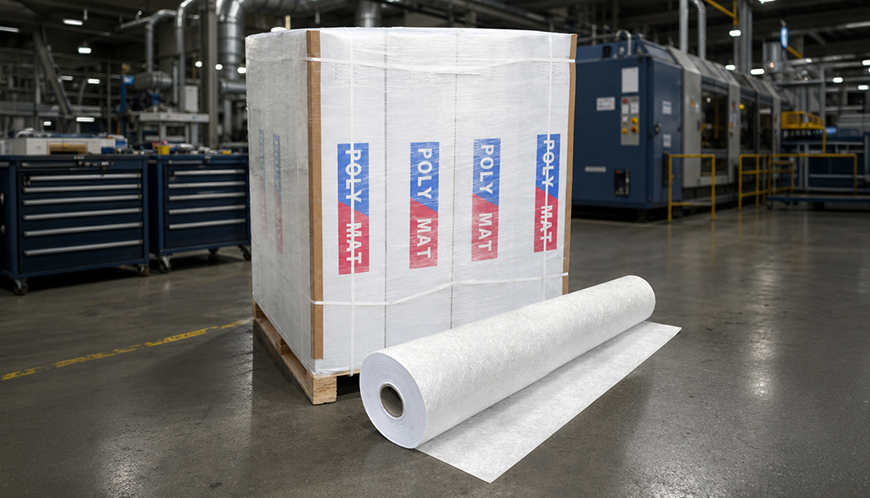
Polychem Middle East supplies high-quality fibreglass and composite reinforcements for the GRP, marine, construction, and industrial fabrication industries. Our reinforcement range includes Chopped Strand Mat (CSM), Woven Roving, Carbon Fibre Fabrics, and Multi-Axial composites — all selected for their superior wet-out characteristics, uniform fibre distribution, and compatibility with polyester, vinyl ester, and epoxy resin systems.
These materials form the structural backbone of GRP laminates and are used in boat hulls, water tanks, architectural panels, industrial pipes, automotive body parts, and hundreds of other composite applications. Polychem ensures consistent fibre quality and reliable supply for small workshops and large-scale manufacturers alike.
Our Products
Our full range of fibre reinforcement materials — available in multiple weights, widths, and formats. Download the Technical Data Sheet for each product below.
CHOPPED STRAND MAT
Randomly oriented short glass fibres providing isotropic reinforcement. Available in 225 gsm, 300 gsm, 450 gsm, and 600 gsm for hand lay-up, spray-up, and press moulding applications.
Download TDSE-GLASS WOVEN ROVING
Bidirectional woven E-glass fabric for high-strength structural laminates. Available in 400 gsm, 600 gsm, and 800 gsm — ideal for boat hulls, tanks, and industrial GRP structures.
Download TDSDIRECT ROVING
Continuous glass fibre roving for spray-up, filament winding, and pultrusion processes. Available in 1200 Tex, 2400 Tex, and 4800 Tex linear densities to suit varied process requirements.
Download TDSCHOP ROVING
2400 Tex chop roving formulated for spray-up gun applications. Produces uniform chopped strand deposition for consistent laminate thickness and mechanical performance in GRP components.
Download TDSBIAXIAL, TRIAXIAL & MULTIAXIAL FABRICS
Non-crimp multi-axial fabrics with fibres oriented in 2, 3, or more directions (0°/90°/±45°). Optimised for vacuum infusion and RTM processes delivering high fibre volume fraction and superior structural strength.
Download TDSCOREMAT
Structural core material for sandwich composite construction. Available in 2mm, 3mm, 4mm, and 5mm thickness. Increases panel rigidity and reduces weight compared to solid glass laminates.
Download TDSC-GLASS SURFACE TISSUE
30 gsm C-glass surface tissue for chemical-resistant gelcoat-free laminates. Provides a smooth, resin-rich surface layer that protects against chemical attack and gives a high-quality cosmetic finish.
Download TDSPOLITISS
Lightweight polyester net fabric made from cotton or synthetic fibres. Used as a separation layer, surface veil, or interleaf in composite laminates to improve surface quality and resin flow distribution.
Download TDSProduct Overview
Our reinforcement products are chosen by GRP fabricators across the UAE and MENA for their consistent areal weight, superior resin compatibility, and reliable mechanical performance. We maintain stock of the most commonly used weights and widths for immediate supply.
- Chopped Strand Mat (CSM) — 300, 450, 600 gsm for hand lay-up and spray-up
- Woven Roving — 600 gsm for high-strength structural laminates
- Carbon Fibre Twill Fabrics — 210P and 240 GSM in 1m and 1.5m widths
- Multi-Axial Fabric CBX 300-1270 for multi-directional structural reinforcement
- Compatible with polyester, vinyl ester, and epoxy resin systems
- Suitable for hand lay-up, spray-up, vacuum infusion, and RTM processes
About Fibre Reinforcements
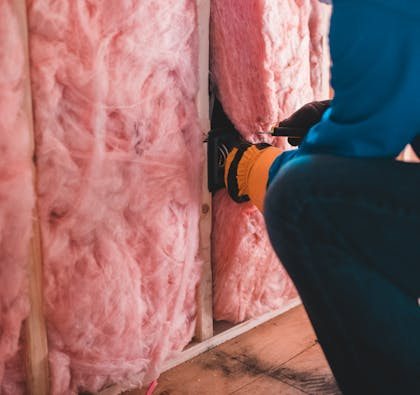
Fibre reinforcements are materials used to enhance the mechanical properties of composite materials, providing strength, stiffness, and durability. These fibres, typically made of glass, carbon, aramid, or natural materials, are embedded within a matrix such as plastic, resin, or metal to form a composite structure. The fibres align to bear load and resist stress, improving the material's overall performance.
Fibre-reinforced composites are widely used in industries like aerospace, automotive, and construction due to their lightweight and high-strength characteristics.
High Strength
Fibres aligned within the matrix bear load directionally, delivering exceptional tensile and flexural strength in finished composites.
Stiffness & Durability
Reinforcement fibres resist deformation under load, improving rigidity and extending the service life of composite structures.
Lightweight
Superior strength-to-weight ratio allows lighter structures without sacrificing mechanical performance — critical for aerospace and automotive parts.
Aerospace
Used in aircraft panels, fairings, brackets, and interior structures where weight reduction directly impacts fuel efficiency and performance.
Automotive
Applied in body panels, bumpers, hoods, and structural components requiring high strength, corrosion resistance, and lightweight design.
Construction
Used in architectural cladding, water tanks, pipes, roofing panels, and structural reinforcements for durable, long-life building applications.
Key Features
Chopped Strand Mat provides isotropic reinforcement and is the workhorse of hand lay-up GRP fabrication. Woven Roving offers significantly higher tensile and flexural strength per ply, making it ideal for structural layers in boat hulls and industrial tanks. Combined laminates using both CSM and Woven Roving are common in marine and industrial GRP for optimised strength and surface quality.
Easy Wet-Out
Rapid and uniform resin wet-out reduces void content and speeds up production for both hand lay-up and spray-up.
Consistent Quality
Uniform areal weight and fibre distribution ensures predictable mechanical properties in finished laminates.
Full Process Range
Suitable for hand lay-up, spray-up, vacuum infusion, and RTM closed-mold composite manufacturing processes.
Frequently Asked Questions
Chopped Strand Mat (CSM) consists of randomly oriented short glass fibres providing isotropic reinforcement and good surface quality. Woven Roving uses continuous aligned fibres offering significantly higher strength but requires CSM interleaving for good surface finish in most GRP builds.
For GRP water tanks, typically 450 gsm CSM is used for the main body laminates with 300 gsm for detail areas. Structural ribs and flanges may use Woven Roving at 600 gsm for added strength and stiffness.
Yes. Our Woven Roving and multi-axial fabrics are suitable for vacuum infusion processes. For infusion, we recommend specific flow media and infusion mesh from our GRP consumables range to ensure even resin distribution.